
4 min read
Original article written by San Francisco Department of Homelessness and Supportive Housing and posted on March 24th, 2026. Link to the original article: sfhsh.medium.com.
It highlights San Francisco SafeHouse and our new model of housing designed for women survivors and their children, 101 Gough Bridge Housing.
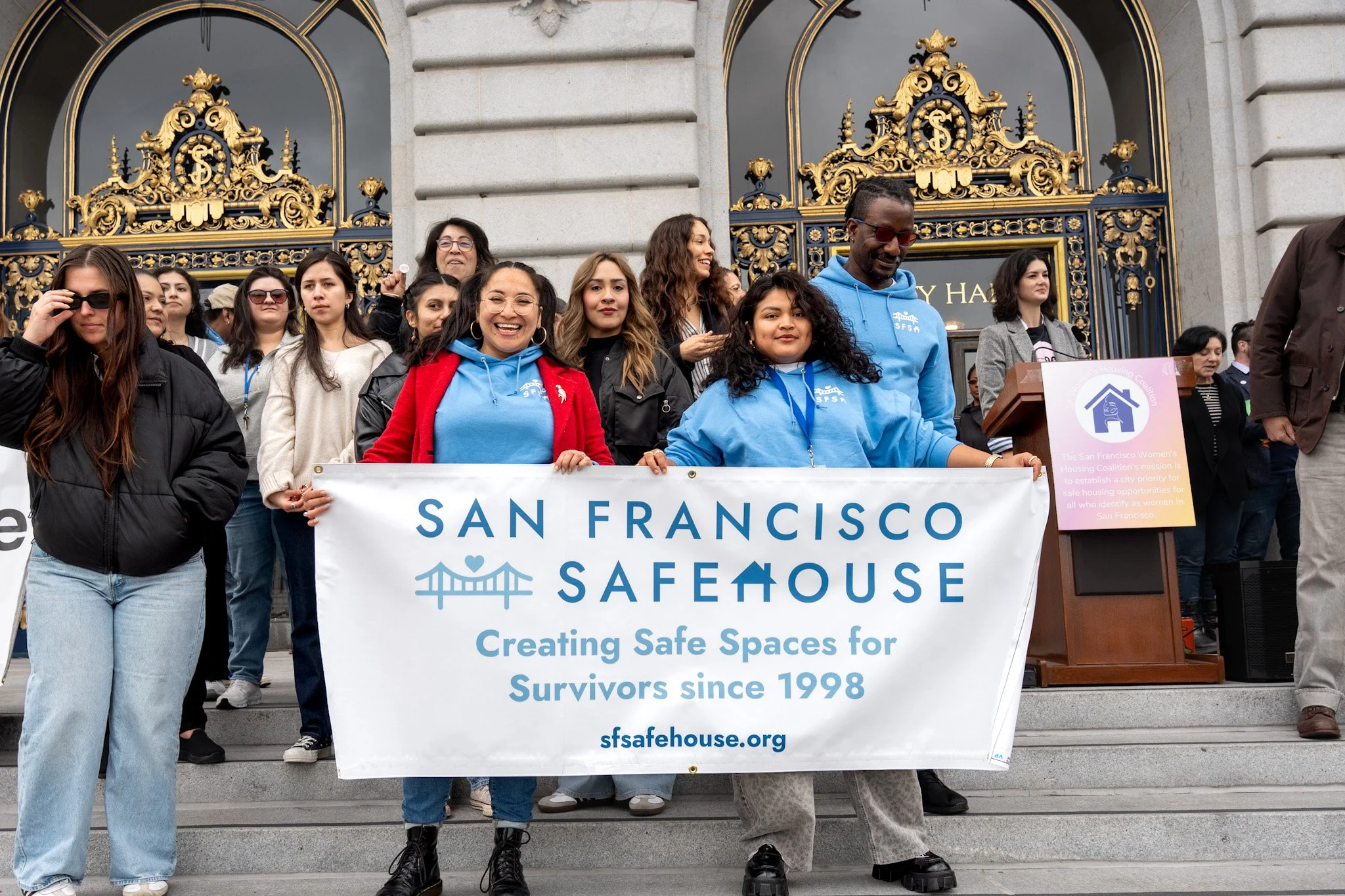
SafeHouse Team at Women’s History Month Rally March 2025
This Women’s Empowerment Month, we recognize the organizations working every day to create safety, stability, and opportunity for women in San Francisco.
San Francisco SafeHouse has been doing this work for more than two decades.
Founded in 1998, SafeHouse was created to support women experiencing homelessness, sexual exploitation, and trafficking, offering not only shelter, but a pathway toward healing, stability, and independence. Since then, the organization has provided more than 266,440+ nights of safety and served over 1,240 women, many of whom are rebuilding their lives after experiencing significant trauma.
At the center of this work is a simple but powerful idea: housing is the foundation for recovery.
Meeting women where they are
SafeHouse’s approach is rooted in trauma-informed care and survivor-centered services. Through programs like the Hope Center, women can access a wide range of supports, from case management and housing navigation to legal services, medical care, and community-building opportunities.
Located in SOMA, the Hope Center serves as a safe and welcoming access point where women can find both practical resources and a sense of belonging. It is one of three San Francisco access points dedicated to survivors of various forms of violence, ensuring that people are connected to housing in a way that prioritizes privacy, dignity, and safety.
This model recognizes that stability is not one-size-fits-all. Each person’s path forward is different, and support must be flexible, responsive, and rooted in trust.
Addressing a critical gap in housing
Despite the need, gender-specific housing remains limited.
Not enough shelter beds in San Francisco are dedicated specifically to women, and many women report feeling unsafe in mixed-gender environments. Survivors of violence and exploitation often face increased risk without access to spaces designed with their safety in mind.
Bridge Housing at 101 Gough is designed to change that.
A new model: Bridge Housing for women and their children
SafeHouse’s newest initiative will transform a building in Hayes Valley into a 23-unit, 53-bed housing site designed specifically for women, including those with children.
Unlike traditional time-limited programs, Bridge Housing offers flexibility. Residents will have access to private apartments and on-site supportive services, with timelines tailored to their individual needs. For some, that may mean a shorter stay. For others, additional time to stabilize, heal, and prepare for permanent housing.
This model reflects what SafeHouse has learned over decades of service: lasting stability requires time, support, and the ability to move at one’s own pace.
At 101 Gough, residents will have:
Private, self-contained living spaces
24/7 secure access and onsite support
Case management and behavioral health services
Workforce development and education support
Community-building opportunities
By bringing these services together under one roof, Bridge Housing creates a space where women can focus not just on surviving, but on rebuilding.
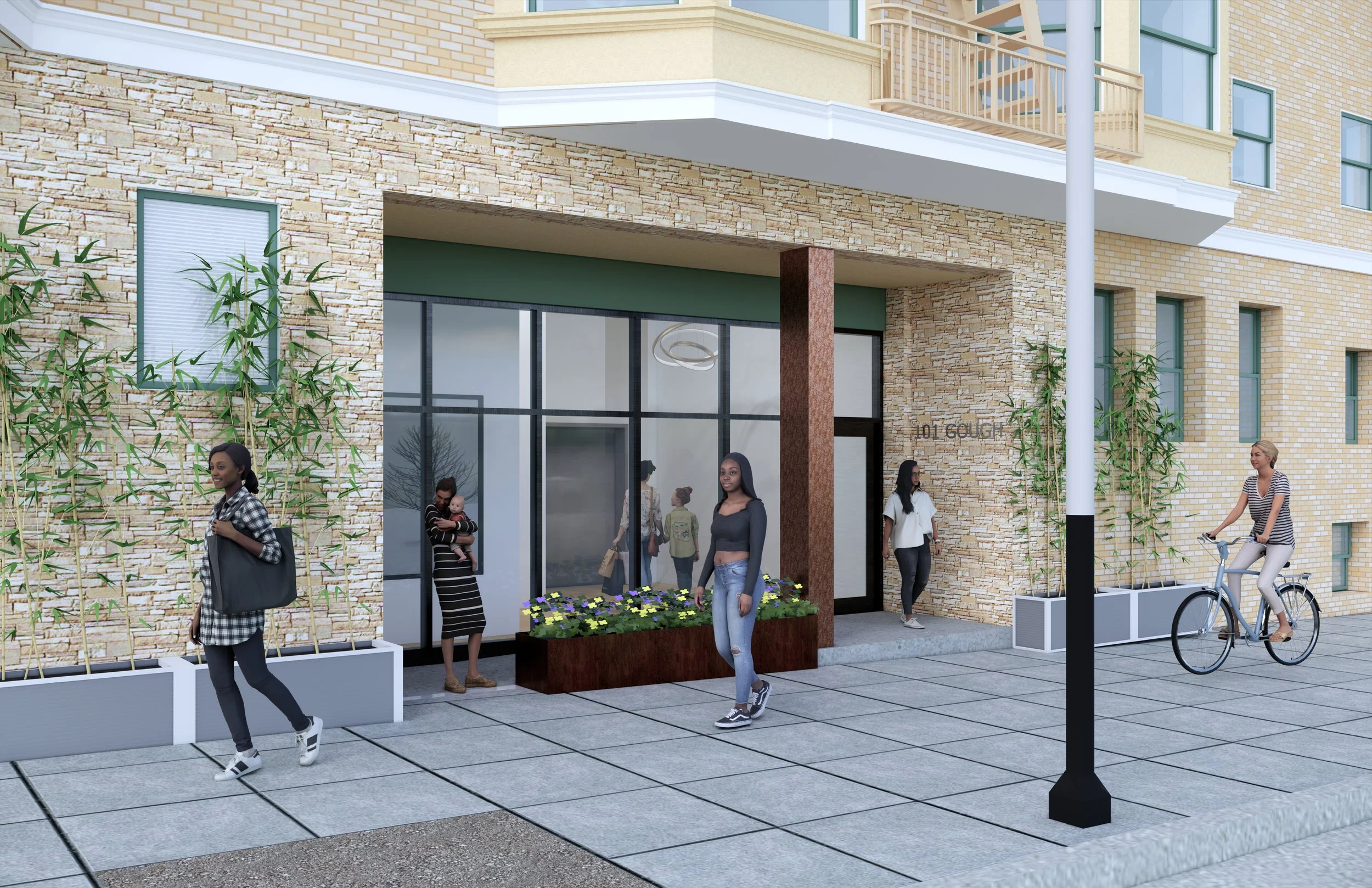
Outside Rendering of 101 Gough
Investing in long-term stability
The project represents a significant investment in gender-responsive housing.
With more than $15 million in voter-approved Proposition A funding from the City and County of San Francisco, along with additional private support already secured, construction is expected to begin in Summer 2026, with doors opening in 2027. Once complete, it will be one of the first programs of its kind in California dedicated to this model of housing for women and their children.
Beyond the building itself, the investment reflects a broader commitment to solutions that prioritize safety, dignity, and long-term outcomes.
When women have access to stable housing and support, the impact extends beyond the individual, strengthening families, improving health outcomes, and creating more resilient communities.
A foundation for empowerment
SafeHouse’s work is grounded in values of safety, compassion, and whole-person care.
For many women, housing is the first step toward reclaiming independence. It creates space to heal from trauma, reconnect with community, and build toward long-term goals.
This Women’s Empowerment Month, SafeHouse reminds us that empowerment starts with meeting basic needs, and that safe, stable housing is essential to that foundation.
As San Francisco continues working to make homelessness rare, brief, and one-time, partnerships like this are critical. Investing in women strengthens families, improves health outcomes, and builds more resilient communities for everyone.
If you’d like to learn more or get involved, contact Chelsea Leonard at chelsea@sfsafehouse.org.